Showing posts with label ScienceNTechnology. Show all posts

Tuesday, April 4, 2017

BHIM launched

PM Narendra Modi has launched a mobile app Bharat Interface for Mobile (BHIM) which is a Unified Payment Intreface(UPI) application. Launch was held at the Digi Dhan Mela held in Talkatora stadium, New Delhi. It is Aadhaar-based payments app which easily allows transferring money or making a payment from your bank account using only phone number. It can work even on basic phones as it supports USSD payments. It has mobile wallet facility in which money can be loaded. Using it anyone can directly connect their phone to bank account like a debit card.

Sunday, April 2, 2017

National Student Startup Policy

To promote technology-driven student start-ups President Pranab Mukherjee launched the National Student Startup Policy (NSSP) during the second Visitor’s Conference.
About NSSP:
The National Student Start-up Policy has been formulated by the All India Council for Technical Education (AICTE) to propel Indian youth to contribute to the nation’s socio-economic progress. It aims to achieve this by promoting technology-driven student start-ups.
 It envisages to create 1 lakh technology based student start-ups and a million employment opportunities in the next 10 years.
 By developing an ideal entrepreneurial ecosystem, the policy aims to lend crucial soft skills such as decision-making in the students. Apart from this, it aims to promote strong inter-institutional partnerships among technical institutions.

End of cards is near Amitabh Kant

Nowadays,all transactions are done digitally through credit and debit cards. Digital transactions and  ATMs were set to disappear,said by Niti Aayog CEO Amitabh Kant. Digital transaction through cards would disappear around by three to four years and it would move to mobile wallet and biometric modes. “Technology will be a key driver of India’s growth,” Kant said . “India believes in globalisation and it will continue to globalise and shall never talk of protectionism. As a result, it will emerge as an economy that would attract investments and growth and make India a hub of economic engagements par excellence". "Around 1500 companies have located their innovation centres in Hyderabad and Bangalore. India is the centre of frugal engineering"said Amitabh Kant.

First on-site huamanoid (robot) in India


First on-site huamanoid (robot) in India, was launched by the Kumbakonam-based City Union Bank (CUB) in Chennai, Tamil Nadu. Humanoid named 'Lakshmi' is India’s first banking robot.Currently, CUB has readied only one version of huamanoid banker and but is planning to deploy 25-30 robots at key branches by end of year if Lakshmi proves a hit with customers.
Features:
Lakshmi is artificial intelligence powered robot. It can speak English, gesture and engage in a life-like manner in conversations.
The robot can interact with customers on more than 125 subjects including account balance and interest rates on loans.
It will not voice the sensitive financial information like account details rather display it discreetly on its screen.


Smart India Hackathon 2017

World’s largest digital national building initiative “Smart India Hackathon 2017” was inaugrated by Union Human Resource Development Minister Shri Prakash Javadekar. Smart India Hackathon 2017, will enable the HRD ministry to reach out to all technology institutions in India and challenge students to work out innovative solutions to some of the difficult problems faced by the nation.
25 different ministries and government departments have come together for supporting this massive initiative. Some of the ministries and departments participating in the Hackathon include Railways, External Affairs, Defence, Civil Aviation, Indian Space Research Organization, Department of Atomic Energy, etc. The HRD minister announced the first set of 250 problem statements that was received from various ministries. The students will be required to solve these problem statements during the Hackathon that will take place in early 2017.

‘Smart India Hackathon 2017’
 The Smart India Hackathon 2017 will focus on finding digital solutions to problems in the areas concerning: power, education, health, water, finance, agriculture, energy, urban & rural development, aviation & shipping, transport, sanitation, sports, law & justice, skill development & entrepreneurship, defence, textiles, tourism, etc. This initiative will help in harnessing the creativity and skills among youth for nation-building.

Thursday, March 30, 2017

National Data Registry (NDR)

The Union Government is developing a National Data Registry (NDR) to compile and serve metadata of different agencies and re-engineer the feature data sets for improving their use. The registry will also serve as a source of authenticated information. The Department of Science and Technology (DST) will be the nodal coordinating agency of the NDR. NDR will require all agencies state, private and academic, collecting and storing geospatial data to provide details of data they store.

 Purpose:
The registry aims to create a catalogue that will prevent duplication of data sets and to help users locate the right agencies to source information.

It will be a ‘meta-data’ repository to only inform about the nature of the data a service provider has. It is not actually be a source of geospatial data.

It can operate across a wide range of formats and can source information automatically.

Thus, Survey of India can vet it for accuracy and see whether it contains information that contravenes national security.

Monday, March 6, 2017

India's first indigenously made electric bus


Country’s first 100 per cent indigenously made electric bus,was launched by Hinduja Group's flagship company Ashok Leyland.It comes with several benefits such as zero emission, longer life cycle, lower maintenance costs and higher residual value when compared with conventional diesel buses, the high initial cost is one of the major barriers. These buses can cost anywhere between Rs.1.5 crore and Rs.3.5 crore depending on the number of seats and battery sizes,” 
These buses were unveiled in lines with National Electric Mobility Plan which aims at a 20% penetration of electric/hybrid (eco-friendly) vehicles by 2020. They enjoy a subsidy under the Central government’s Faster Adoption and Manufacturing of (Hybrid) and Electric Vehicles (FAME) scheme. 

Electricity from water without using any power or chemicals


Team of scientists led by Dr. R.K. Kotnala from Delhi’s National Physical Laboratory (NPL) developed a novel way using of producing electricity from water hydroelectric cell at room temperature without using any power or chemicals.Dr. R.K. Kotnala and team used nanoporous magnesium ferrite to split water into hydronium (H3O) and hydroxide (OH) ions and used silver and zinc as electrodes to make a cell that produces electricity.To further enhance the activity of magnesium ferrite, about 20% of magnesium is replaced with lithium. The substitution of lithium at magnesium site increases the sensitivity of magnesium ferrite. This is helpful in dissociating water at room temperature as the electrons get trapped in the oxygen deficient sites.

Tuesday, January 19, 2016

First flower blooms in space


For the first time ever, a flower has bloomed in space, aboard the International Space Station. This brings cosmic explorers one step closer to growing other flowering plants in space, like tomatoes, which NASA says it hopes to do in 2018.zinnia plant had flowered on the International Space Station (ISS). Scot Kelly, an American astronaut, engaged in the space work since March 2015 who also doubled up as a resident gardener shared on Twitter how successful he was in making a brightly hued Zinnia bloom.


Friday, January 15, 2016

100 New Alien Planets


A few years ago NASA’s planet-hunting Kepler spacecraft was crippled by a mechanical malfunction which really threw a wrench in the works discovered 100 new alien planets orbiting other stars.It has found a system with three planets that are bigger than Earth, spotted a planet in the Hyades star cluster—the nearest open star cluster to Earth—and discovered a planet being ripped apart as it orbits a white                                                                                                   dwarf star.
Kepler (spacecraft):
Kepler is a space observatory launched by NASA to discover Earth-like planets orbiting other stars.The spacecraft, named after the Renaissance astronomer Johannes Kepler,was launched on March 7, 2009.

Friday, January 1, 2016

‘Barak 8’


Israeli-Indian developed Barak 8 missile system carried out two successful interceptions from an Indian Navy ship.Long Range Surface to Air Missile (LRSAM) ‘Barak 8’ successfully test fired from INS Kolkata.Barak 8 was jointly developed by Israel Aerospace Industries (IAI), India's Defence Research & Development Organisation (DRDO).

Thursday, December 31, 2015

Gaofen-4


China has successfully launched its most sophisticated observation satellite Gaofen-4, as part of the country’s high-definition (HD) earth observation Gaofen project.It was launched aboard a Long March-3B carrier rocket from the Xichang Satellite Launch Centre in the southwestern province of Sichuan. It was the 222th space flight of the Long March rocket series and China’s 19th space mission in year 2015.Gaofen-4 is China’s first geosynchronous orbit high-definition optical imaging satellite and world’s most sophisticated HD geosynchronous orbit remote sensing satellite.


Monday, December 28, 2015

Astra missile


The air-to-air missile ASTRA was once again successfully test-fired by the Indian Air Force off the coast of Odisha near the Integrated Test Range, BalasoreDefence Research and Development Organisation (DRDO) have successfully tested crucial anti-jamming capability of the Astra missile.It is radar homing missile fuelled by single stage solid fuel and has payload capacity of 15 kg conventional explosives.It possesses Shot Kill Probability (SSKP) with range of 60-km plus that makes it one of the most reliable in its class of weapon systems.


Sunday, December 20, 2015

Shaheen-IA


Pakistan successfully test fired nuclear capable ballistic missile ‘Shaheen-IA’ having range of about 900 km. ‘Shaheen-IA’ also known as ‘Falcon’. Shaheen-I is a land-based supersonic and short-to-intermediate range surface-to-surface guided ballistic missile jointly designed and developed by the joint venture of NESCOM and the National Defence Complex (NDC).It is dedicated and named after a species of Falcon found in the mountains of Pakistan. The Shaheen I is also designated Hatf IV. Both the Shaheen I and Shaheen IA are Pakistan's equivalent to the United States Pershing 1 and Pershing 1a missiles.

6 satellites of Singapore into Space


Indian Space Research Organisation (ISRO) successfully launched 6 satellites of Singapore into Space. The satellites were launched using the Polar Satellite Launch Vehicle (PSLV) C29 from the first launch pad of the Satish Dhawan Space Centre (SDSC) at Sriharikotta in Andhra Pradesh.ISRO has put into orbits 57 foreign satellites belonging to 20 countries successfully. Significantly, the list of countries includes scientifically advacned countries like the USA, the UK, France and Germany among others.The national space agency also tested the fourth stage of its PSLV rocket. ISRO’s PSLV C-29 rocket lifted off from the first launch pad of the Satish Dhawan Space Centre here and in about 21 minutes, it placed all six Singapore satellites in the intended orbit before it commenced its ‘coasting’ to prepare for the test.And some 50 minutes later, ISRO scientists at the Mission Control Centre here fired the fourth stage of the rocket for a few seconds as a test.


Monday, November 30, 2015

LRSAM missile

                       
Long Range Surface-to-Air Missile (LRSAM) co-developed by India and Israel was successfully test-fired for the first time from an Israeli Naval Platform. The trial test was undertaken by Israel Aerospace Industries (IAI) in the presence of Defence Research Development Organisation (DRDO) scientists. During the test the missile achieved the desired goal by hitting the incoming target.LRSAM is also called Barak 8 missile.Barak 8 is an advanced, long-range missile defence and air defence system. Its main features are long range, active radar seeker missile, vertical launch and multiple simultaneous engagements. 


Sunday, November 29, 2015

First commercial satellite of JAPAN


The Japanese national space programme launched its first commercial satellite, thereby entering a business mainly dominated by Russian and European firms.The H-IIA rocket carried the TELSTAR 12V communications and broadcasting satellite for Canadian satellite operator Telesat.The launch was overseen by the Japan Aerospace Exploration Agency and Mitsubishi Heavy Industries from Tanegashima Space Center in southwest Japan.The H-IIA is Japan's first successful indigenous liquid-fuelled rocket..

Friday, November 27, 2015

Dhanush missile(a Naval Version of PRITHVI)


The nuclear-capable Dhanush ballistic missile was successfully test fired from warship Subhadra, off the Puri coast of Odisha in the Bay of Bengal. The test was conducted by Defence Research and Development Organisation (DRDO) and it was a perfect mission as the missile hit the target point with high degree of accuracy.It is capable of carrying both conventional as well as nuclear warheads with pay-load capacity of 500 kg and can strike targets in the range of 350 km.It is a nuclear capable missile.

Tuesday, November 24, 2015

space agency is attempting to grow flowers in space

Flowers could be blooming on the International Space Station (ISS) after New Year,NASA's first flowering crop (lettuce) experiment on the orbiting laboratory became success on August 2015 and now attempting to grow Zinnias.NASA astronaut and Space Station crew member Kjell Lindgren set up a plant growth experiment.The Zinnias will grow for 60 days, which is twice as long as the first and second crop of lettuce that grew on the space station. During the growth cycle, the LED lights will be on for 10 hours and off for 14 hours in order to stimulate the plants to flower.


Monday, November 23, 2015

interceptor AAD


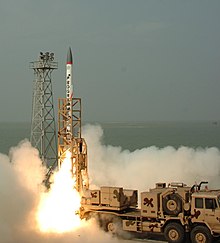
Indigenously developed supersonic Advanced Air Defence (AAD) interceptor missile was successfully test fired from the Abdul Kalam Island off the Odisha coast.The interceptor AAD missile has been indigenously developed by the Defence Research and Development Organisation (DRDO) under Ballistic Missile Defence Programme.It is a 7.5-meter tall and single stage solid rocket propelled guided missile. It is equipped with a navigation system along with a hi-tech computer and an electro-mechanical activator. It also has its own mobile launcher, sophisticated radars and independent tracking system to secure data link for interception and homing capabilities.

Worth reading